 ReefDeck
Open the free logbook
ReefDeck
Open the free logbook
The Alkalinity–pH Relationship in Reef Tanks
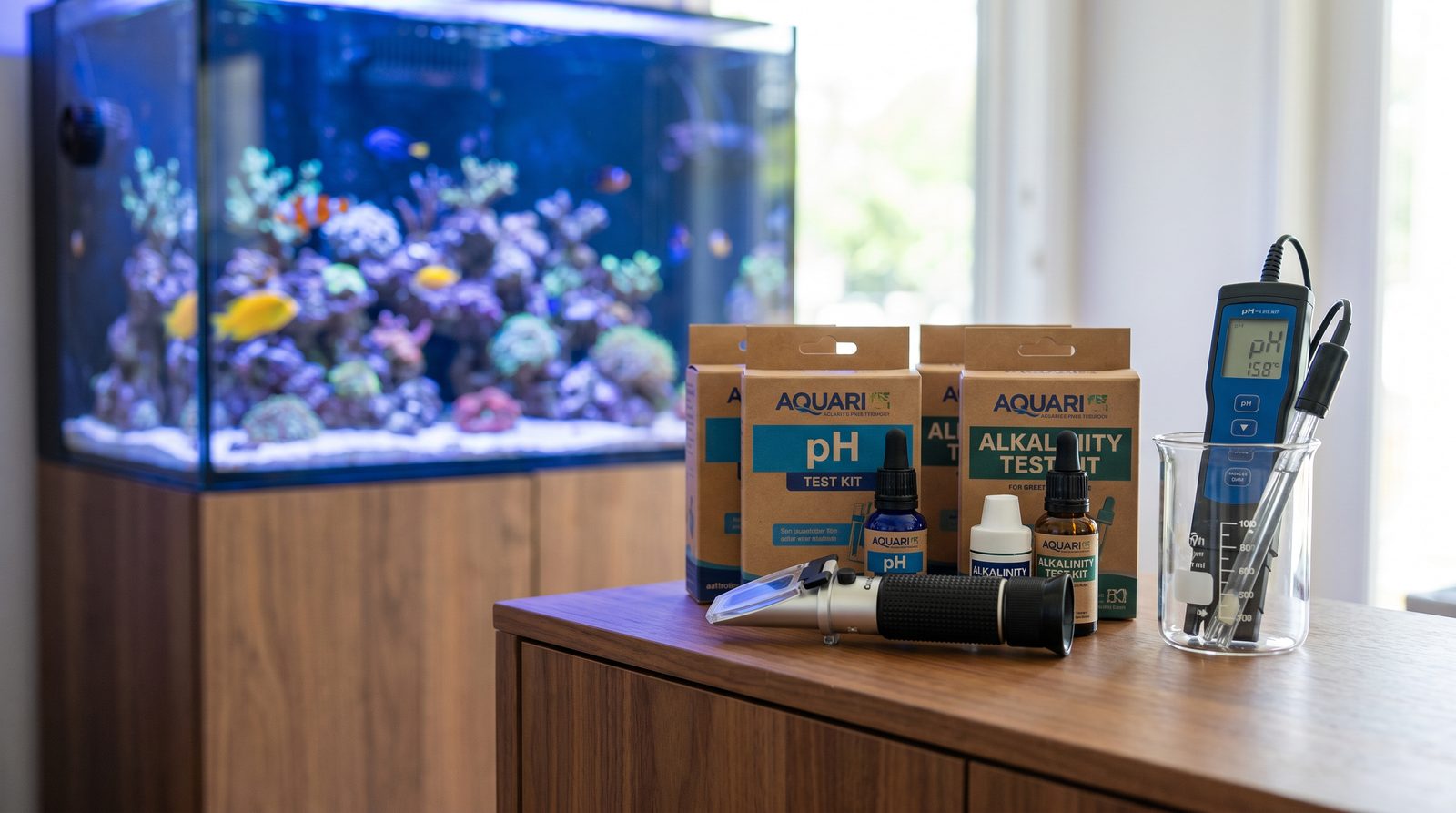
Alkalinity and pH are related but not the same. Alkalinity buffers pH — a higher carbonate reserve makes the water more resistant to pH swings — but the actual pH level is primarily driven by dissolved CO₂. In a reef tank, pH typically rises through the day as photosynthesis consumes CO₂ and falls overnight as respiration produces it. Chronically low pH (below 7.8) despite good alkalinity almost always points to elevated CO₂ in the tank room, not an alkalinity problem.
Of all the parameter pairs in reef keeping, alkalinity and pH cause the most confusion. They are clearly related — raise your alkalinity and pH often follows, neglect alkalinity and pH becomes unstable — yet they respond to completely different interventions and measure fundamentally different things. Getting this distinction right is what separates targeted troubleshooting from chasing your tail.
What alkalinity and pH each actually measure
pH measures the hydrogen ion concentration in the water — in practical terms, how acidic or basic it is at that moment. Reef tanks should sit between 7.8 and 8.4, with most systems landing around 8.1–8.3 in the afternoon and dipping toward 7.9–8.0 overnight.
Alkalinity measures the water's reserve of carbonate and bicarbonate ions — its capacity to resist a pH drop when acid is added to the system. A high-alkalinity tank (say 10–11 dKH) will absorb more acid before its pH moves than a low-alkalinity tank at 7 dKH. In other words, alkalinity is the buffer, not the level.
Where CO₂ fits in
Carbon dioxide dissolves in seawater to form carbonic acid, which then dissociates and directly lowers pH. This is the central link: CO₂ is the primary driver of pH in a reef tank, and alkalinity is the system's defence against CO₂-driven acid swings.
During daylight hours, photosynthesis — in your macroalgae, zooxanthellae, and chaeto refugium — consumes CO₂. pH rises, sometimes quite noticeably, often by 0.2–0.3 pH units between morning and afternoon. After lights out, respiration dominates: all the animals, bacteria and coral tissue exhale CO₂, the gas builds up in the water, and pH drifts back down. This daily rhythm is normal. It is chronic depression below 7.8 that signals a problem.
Causes of chronically low pH
- High CO₂ in the tank room. A sealed house in winter, a room with multiple people or gas appliances, or a cabinet-enclosed sump with little air exchange — all of these elevate ambient CO₂ above the outdoor level (roughly 420 ppm), and the tank equilibrates with the room air. Indoor CO₂ levels of 1000–2000 ppm are not unusual in modern insulated homes, and each increase of a few hundred ppm can push your tank pH down by 0.1–0.2 units.
- Inadequate surface agitation. Gas exchange between water and air requires movement at the surface. A glassy, undisturbed surface traps CO₂ in the water. Strong surface agitation from a powerhead, skimmer, or return pump outlet is the simplest intervention.
- Depleted alkalinity. If alkalinity genuinely falls below 7 dKH the buffer capacity is reduced, and even normal CO₂ production can push pH down more sharply than usual.
- A calcium reactor running hot. Calcium reactors dissolve aragonite using CO₂-enriched water, which then drips back into the tank. If the effluent rate or pH is not tuned correctly, the reactor can add significant CO₂ to the system and depress pH.
Practical fixes for low reef tank pH
| Problem | Fix | Notes |
|---|---|---|
| High room CO₂ (sealed room, winter) | Pipe fresh outside air to the protein skimmer inlet | The most effective intervention on an insulated home; skimmer strips CO₂ from tank air |
| High room CO₂ (general) | Increase room ventilation; open a window near the tank during the day | Even a small gap significantly reduces indoor CO₂ in most buildings |
| Poor surface gas exchange | Increase surface agitation with a powerhead or adjust return pump outlet | A simple first step; costs nothing if you already have the equipment |
| Low alkalinity amplifying swings | Bring alkalinity into the 8–9 dKH range with gradual dosing | Fixes buffer capacity; does not raise pH directly but reduces swing depth |
| Refugium not running during the night | Run a refugium light on a reverse photoperiod (on at night) | Refugium photosynthesis consumes CO₂ overnight, raising the overnight low |
| CO₂ scrubber on protein skimmer | Add a CO₂ scrubber filled with calcium hydroxide media before the skimmer intake | Raises pH reliably; media needs periodic replacement |
How high should you push alkalinity to improve pH?
This is a common instinct — if more alkalinity means better pH buffering, why not run at 12 dKH? The answer is diminishing returns and increasing risk. Going from 7 dKH to 9 dKH genuinely improves buffer capacity and reduces pH swing amplitude. Going from 9 dKH to 12 dKH adds relatively little additional buffering while raising the risk of precipitation events and direct stress to sensitive SPS corals.
The practical guidance: set alkalinity at a stable, comfortable value in the 8–9 dKH range and leave it there. If your pH is still chronically low, fix the CO₂ problem rather than pushing alkalinity higher. The two interventions address fundamentally different things.
Logging both to understand your tank's rhythm
The pH–alkalinity relationship is one of the clearest examples of why trend data is more useful than a single reading. If you log your pH at the same time each afternoon and your alkalinity two or three times a week, you will quickly see whether pH is moving in sync with alkalinity or responding to something else entirely. A tank where alkalinity is stable but pH is still low is telling you the problem is CO₂, not carbonate chemistry — a conclusion that is only visible when you have both values logged over time. ReefDeck records both in the same test entry, making this comparison straightforward.
Log pH and alkalinity together to see the pattern
ReefDeck lets you record pH and alkalinity in the same test entry so you can spot the relationship between them in your own tank over time. Free and offline — your data stays yours.
Open ReefDeck — it's free → Works on phone and desktop · installs as an app · exports to CSV anytimeFrequently asked questions
Does raising alkalinity raise pH?
Indirectly, yes — higher alkalinity improves the water's buffer capacity, which reduces the depth of pH swings and tends to raise the overnight low slightly. However, alkalinity does not directly set pH. The actual pH level is primarily driven by dissolved CO₂, so chronically low pH is better fixed by improving gas exchange or reducing room CO₂ than by dosing more alkalinity.
Why does reef tank pH drop at night?
After lights out, photosynthesis stops but respiration continues in all the animals, bacteria and coral tissue. This produces CO₂ that accumulates in the water and lowers pH. A daily pH swing of 0.2–0.4 units between the afternoon peak and the overnight low is completely normal. Wider swings or a baseline that never rises above 7.8 indicate a CO₂ problem.
How do I raise pH in a reef tank without changing alkalinity?
The most effective approaches are improving gas exchange (strong surface agitation, piping fresh outside air to your skimmer) and running a refugium or chaeto section on a reverse photoperiod so photosynthesis consumes CO₂ at night. A CO₂ scrubber on the skimmer inlet is the most reliable fix for tightly sealed homes. These interventions raise pH by removing CO₂ rather than by altering carbonate chemistry.
What is a safe daily pH swing for a reef tank?
A daily swing of 0.2–0.4 pH units between the afternoon peak and the overnight minimum is considered normal and acceptable for a healthy reef. Swings above 0.5 pH units, or a baseline that never rises above 7.9–8.0 in the afternoon, are worth investigating — typically by addressing room CO₂ and surface agitation first.