 ReefDeck
Open the free logbook
ReefDeck
Open the free logbook
Ideal Reef Tank Water Parameters: A Complete Reference Chart
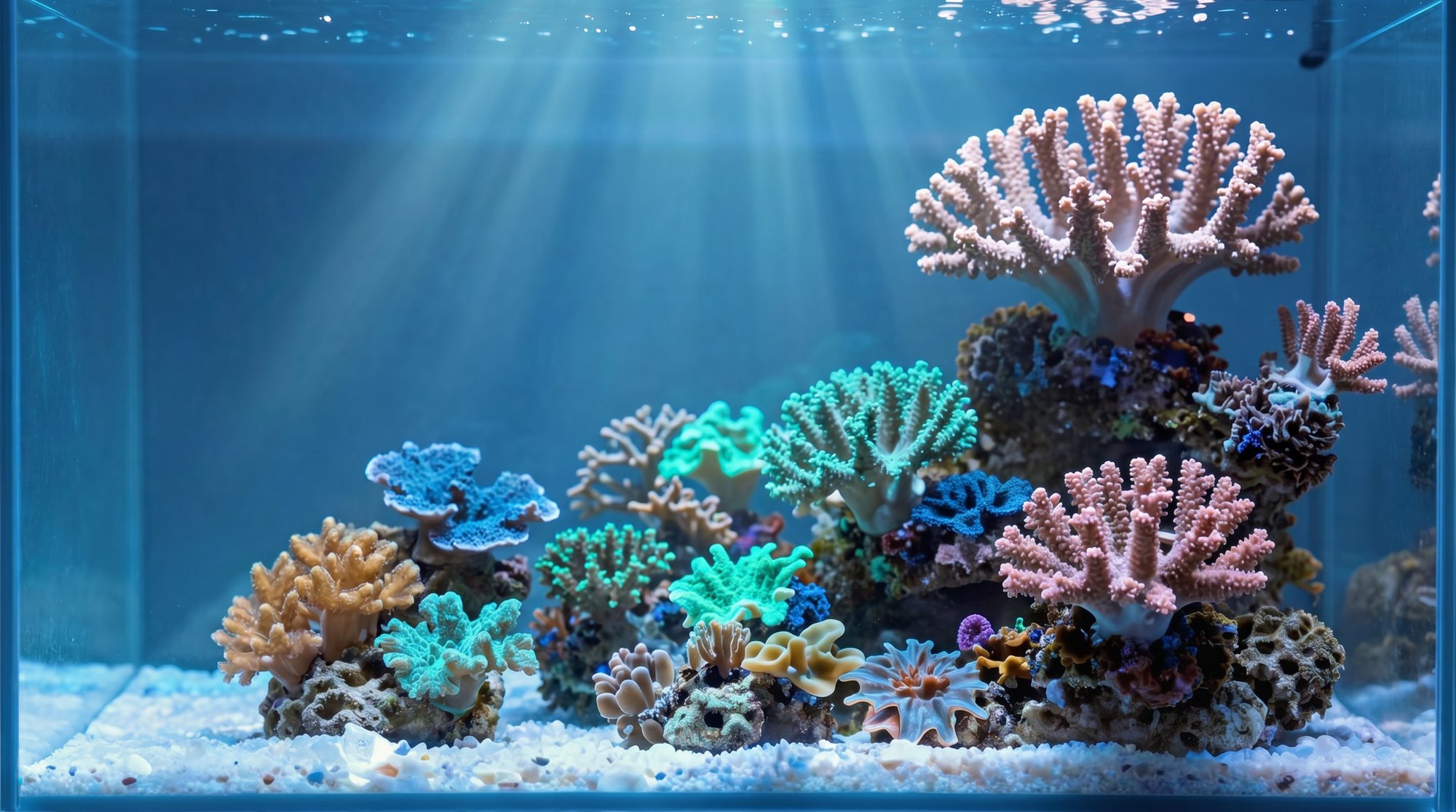
A healthy mixed reef runs at salinity 35 ppt (≈1.025–1.026 SG), temperature 24–27 °C, pH 7.8–8.4, alkalinity 7–11 dKH, calcium 380–450 ppm, magnesium 1250–1350 ppm, nitrate 1–10 ppm and phosphate 0.03–0.10 ppm, with ammonia and nitrite at zero. Stability inside these ranges matters far more than hitting any exact number.
Every reef-keeping problem eventually comes back to water chemistry. Bleaching corals, stalled growth, nuisance algae, a sudden tissue recession overnight — trace it far enough and you usually find a parameter that drifted, spiked, or swung. The good news is that the "ideal" targets are well understood and remarkably consistent across successful tanks. The chart below is the one to keep on your fridge.
The reef parameter reference chart
These are the ranges most reef keepers aim for on a typical mixed reef of soft corals, LPS and SPS. Dedicated SPS-only systems run a little tighter; a softie-only tank is far more forgiving.
| Parameter | Ideal range | Why it matters |
|---|---|---|
| Salinity | 35 ppt · ≈1.025–1.026 SG | Sets osmotic balance; match it in every water change. |
| Temperature | 24–27 °C (75–81 °F) | Drives metabolism; stability beats the perfect number. |
| pH | 7.8–8.4 | Tracks CO₂ and alkalinity; swings stress corals. |
| Alkalinity (KH) | 7–11 dKH | The buffer corals build skeleton from — keep it steady. |
| Calcium | 380–450 ppm | Core building block of coral skeleton. |
| Magnesium | 1250–1350 ppm | Keeps calcium and alkalinity in solution together. |
| Nitrate (NO₃) | 1–10 ppm | Coral food; zero causes pale tissue and dinos. |
| Phosphate (PO₄) | 0.03–0.10 ppm | Also coral food; excess fuels algae, zero starves colour. |
| Ammonia / Nitrite | 0 ppm | Any reading means a cycling or livestock problem. |
The "big three": alkalinity, calcium and magnesium
These three move together and are consumed as your corals grow. Alkalinity is the one to watch most closely — it changes fastest and corals are most sensitive to it swinging. On an active tank it can fall by 1 dKH or more per day, which is exactly why a single weekly test can mislead you. Calcium drifts more slowly, and magnesium is the slow-moving anchor that keeps the other two from precipitating out of the water.
The practical rule: pick an alkalinity target you can hold (8–9 dKH is a comfortable, forgiving choice), and dose to keep it there rather than chasing a higher number for faster growth.
Nutrients: nitrate and phosphate
This is where modern reef-keeping has changed most. The old goal of "zero nutrients" is now understood to be a mistake. Corals are animals — they need feeding, and that means a small, measurable amount of nitrate and phosphate in the water. Bottomed-out nutrients are one of the most common causes of pale colour, stalled growth, and dinoflagellate blooms.
Aim for a balanced, low-but-present level: roughly 1–10 ppm nitrate alongside 0.03–0.10 ppm phosphate. The ratio between them matters as much as the absolute numbers.
Salinity, temperature and pH
Salinity is simple but unforgiving: keep it at 35 ppt (around 1.025–1.026 SG) and, crucially, make sure your top-off and new saltwater match so it never drifts. Temperature should sit somewhere in the 24–27 °C band and — the recurring theme — stay there; a stable 25 °C beats a tank that climbs three degrees every afternoon. pH naturally rises and falls through the day with CO₂; a gentle daily rhythm is normal, sharp swings are not.
Why a single reading lies to you
Here is the part most charts leave out. A parameter is not a number — it is a trend. Alkalinity at 8.2 dKH tells you almost nothing on its own. Alkalinity that has fallen from 9.0 to 8.2 over four days tells you your corals are consuming buffer faster than you are dosing, and that you will be in trouble by the weekend. Same reading, completely different story.
That is the entire case for logging. The moment you start recording each test with a date, the chart above stops being a static target and becomes a moving picture of your tank's health — one where you can see problems building before they cost you a colony.
Track these parameters the easy way
ReefDeck is a free, offline reef logbook. Record a full test in seconds, watch every parameter trend over time, and set your own safe ranges — no account, and your data stays yours.
Open ReefDeck — it's free → Works on phone and desktop · installs as an app · exports to CSV anytimeFrequently asked questions
What are the ideal reef tank water parameters?
A healthy mixed reef sits at salinity 35 ppt (≈1.025–1.026 SG), temperature 24–27 °C, pH 7.8–8.4, alkalinity 7–11 dKH, calcium 380–450 ppm, magnesium 1250–1350 ppm, nitrate 1–10 ppm and phosphate 0.03–0.10 ppm, with ammonia and nitrite at zero.
What is the most important parameter to keep stable?
Alkalinity. Corals tolerate a fairly wide alkalinity range but react badly to rapid swings, so holding it within about ±0.5 dKH day to day matters more than the exact figure you pick.
Should nitrate and phosphate be zero?
No. Zero nutrients commonly cause pale corals and dinoflagellate outbreaks. A small measurable amount — about 1–10 ppm nitrate and 0.03–0.10 ppm phosphate — feeds coral colour and the zooxanthellae living in their tissue.
How often should I test my reef tank?
Test alkalinity 2–3 times a week on an active SPS tank, calcium and magnesium weekly, and nitrate and phosphate weekly. Glance at salinity and temperature daily. Logging each result is what turns isolated readings into a trend you can act on.