 ReefDeck
Open the free logbook
ReefDeck
Open the free logbook
Why Your Reef Tank Alkalinity Swings (and How to Stabilise It)
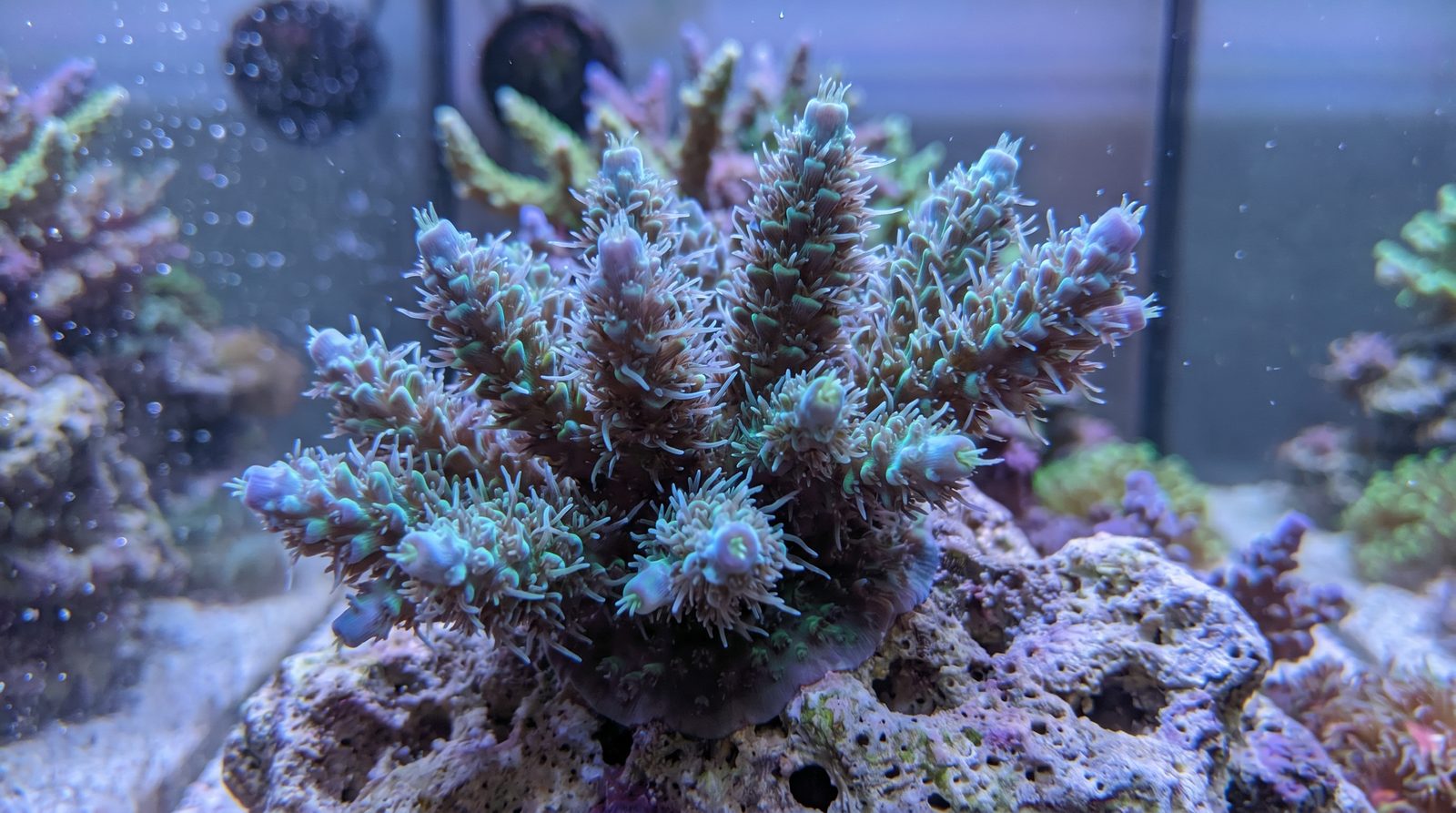
Alkalinity swings are most commonly caused by inconsistent dosing, a mismatch between your dose and your corals' actual consumption rate, large water changes with differently mixed saltwater, or CO₂ fluctuations. Corals are highly sensitive to dKH swings — even a 1–2 dKH move within 24 hours can trigger tissue recession and bleaching. The fix is to test frequently, calculate your true daily consumption, and dose in small, evenly spaced increments to replace exactly what the tank uses.
Alkalinity is the parameter reef keepers spend the most time worrying about — and with good reason. It moves faster than calcium or magnesium, corals are acutely sensitive to it dropping or spiking, and the difference between a tank that is "fine" and one heading for a bleaching event can be a shift of just 1–2 dKH over a single day. Understanding why it swings is the first step to stopping it.
What alkalinity actually is (and why it moves)
Alkalinity — measured in dKH (degrees of carbonate hardness) — is the water's reserve of bicarbonate and carbonate ions. Corals extract these ions to build their calcium carbonate skeletons, so in an active reef the alkalinity falls continuously, all day, every day. On a lightly stocked tank with slow-growing softies that drawdown might be 0.1–0.2 dKH per day; on a mature SPS system packed with fast-growing Acropora it can exceed 1.5 dKH per day. Whatever your tank's rate, if you are not replacing that amount consistently, alkalinity will drift.
The five main causes of alkalinity swings
- Inconsistent dosing. Skipping a dose, doubling up to compensate, or a dosing pump that runs at different volumes each day all create sawtooth swings. Even a short power cut that pauses your two-part dosing can push alkalinity down by 0.5 dKH or more overnight.
- Consumption–dose mismatch. If your corals have grown since you last calculated your dose, they are now consuming more than you are adding. This produces a slow, steady downward drift that only becomes obvious when you compare readings from a week apart.
- Water changes with unmatched salt. Many reef-grade salts have different alkalinity levels out of the bag — anywhere from 7 to 12 dKH depending on brand and batch. A 10 % water change with saltwater mixed to 11 dKH into a tank sitting at 8.5 dKH will push your value up noticeably, and the reverse will pull it down.
- CO₂ and pH fluctuations. Alkalinity and pH are linked through the carbonate system. High CO₂ in the tank room — common in winter with sealed windows — can depress pH and shift the equilibrium, causing apparent alkalinity instability even when your dosing is correct. See the alkalinity–pH guide for a deeper treatment of this.
- Calcium precipitation events. If calcium and alkalinity are both elevated and the temperature rises, the two can precipitate together as calcium carbonate — a white snowfall sometimes called a "precipitation event" — crashing both values simultaneously.
Why corals react so badly to swings
The target range for alkalinity — 7 to 11 dKH — is wide enough that many different values work perfectly well. A tank holding steady at 7.5 dKH will grow corals just as well as one at 10 dKH, provided it stays there. The problem is movement. Coral tissue reacts to a sudden rise in dKH by going into what hobbyists call "alkalinity shock": polyps retract, tissue may recede from the skeleton tips, and in severe cases a rapid swing can trigger full bleaching across an SPS colony within 48 hours.
The generally accepted safe limit is no more than 1–2 dKH change in any 24-hour period, and many experienced SPS keepers prefer to keep swings below 0.5 dKH day-to-day. That level of stability requires deliberate effort — it does not happen by accident.
How to stabilise your alkalinity
| Step | What to do | Why it helps |
|---|---|---|
| 1. Establish baseline consumption | Test at the same time each day for 3–5 days without dosing. The average daily drop is your true consumption. | You cannot dose correctly until you know what your tank actually uses. |
| 2. Dose to match consumption | Set your two-part or calcium reactor to replace the daily consumption, not a round number. | Matching dose to consumption stops the drift. A little under is safer than a little over. |
| 3. Dose in small, frequent increments | Spread your daily dose across 4–6 pump cycles or use a calcium reactor for continuous delivery. | Smaller doses create smaller peaks and troughs than one large daily bolus. |
| 4. Match your new saltwater | Mix and test each batch of saltwater before using it; target the same dKH as your tank. | Eliminates the step-change a single water change otherwise causes. |
| 5. Test twice a week minimum | Track the trend, not just the latest reading. | Trending data shows a drift building before it becomes a swing. |
Automating for consistent dosing
Manual dosing — adding a measured amount once a day by hand — works well for small or lightly stocked tanks. As coral biomass grows, the daily dose grows with it, and the margin for error shrinks. At that point most reef keepers move to a dosing pump running four to six cycles per day, or to a calcium reactor that delivers alkalinity and calcium continuously as water passes through. Either approach eliminates the human inconsistency that causes most swings.
Automation does not remove the need to test — it just changes what you are testing for. With a dosing pump you need to catch the slow consumption–dose mismatch as corals grow. With a calcium reactor you need to watch for pH swings in the effluent that can drag your tank pH down. In both cases, a regular test log is what catches those changes early.
Logging as your early-warning system
A single alkalinity reading tells you where you are. A week of readings tells you where you are going. Even two or three tests per week, logged with their date and time, will reveal a slow drift that would be invisible if you only tested monthly. The moment you see a trend line that is not flat, you can adjust your dose before any coral is stressed — rather than diagnosing a bleaching event after the fact. ReefDeck records each test automatically in a trend chart so the direction of travel is always visible, not buried in a spreadsheet.
Stop guessing — track every dKH reading
ReefDeck logs each alkalinity test with a timestamp and plots the trend for you, so you can see a swing developing days before it costs a colony. Free, offline, and your data is always yours.
Open ReefDeck — it's free → Works on phone and desktop · installs as an app · exports to CSV anytimeFrequently asked questions
How much can alkalinity swing before it harms corals?
Most reef keepers treat 1–2 dKH in any 24-hour period as the upper safe limit. Sensitive SPS corals can show tissue stress above 1 dKH per day; a more conservative target of 0.5 dKH or less daily swing is common in SPS-dominated systems.
Why does my alkalinity drop overnight even with a dosing pump running?
If your dosing pump runs during the day but not overnight, your corals continue consuming alkalinity while no dose is being added — producing a predictable overnight drop. Spread your pump cycles evenly across 24 hours, including the night, to eliminate this pattern.
Can a water change cause an alkalinity swing?
Yes. If the saltwater you are adding has a different alkalinity than the tank, a water change will shift your dKH immediately. Always test the alkalinity of freshly mixed saltwater and adjust it to match your target before adding it to the tank.
How often should I test alkalinity to catch swings early?
On an SPS-heavy tank, two to three tests per week is the practical minimum. Logging those readings in a trend chart is what makes the data useful — a single reading in isolation cannot tell you whether your alkalinity is rising, falling, or stable.