 ReefDeck
Open the free logbook
ReefDeck
Open the free logbook
Trace Elements in Reef Tanks: What ICP Tells You
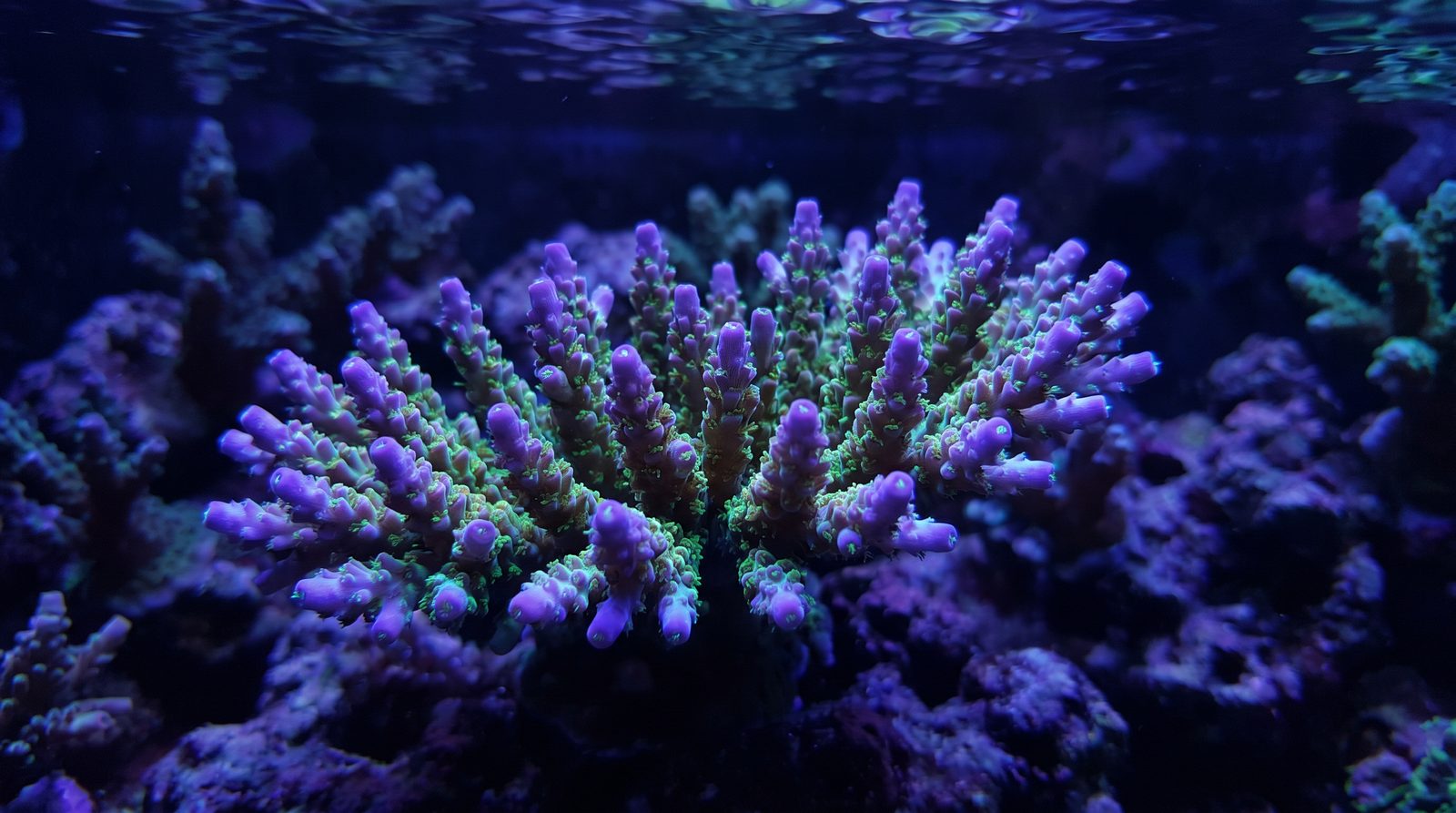
Trace elements — including iodine, strontium, potassium, iron, manganese, molybdenum and vanadium — are present in reef water at ppb concentrations but influence coral colour, enzyme activity and skeletal formation. They are replenished by quality salt mix, water changes and all-in-one supplements. More is not better: elevated trace metals stress invertebrates and can be lethal. ICP-OES is the only practical way to monitor most of them, and action is only warranted when levels are measurably and significantly off — not for minor deviations from reference ranges.
Open a Triton or ATI ICP report and you will find 30 to 70 element readings, most of them in the ppb range. Major elements like calcium and magnesium are straightforward to interpret because hobbyists test them weekly. Trace elements are different: most reef keepers have no hobby-kit data at all for iodine, potassium, molybdenum or vanadium. The ICP result is often the first reading they have ever seen — and without context, the numbers are hard to judge.
What trace elements actually do in a reef
Seawater contains every naturally occurring element, most at vanishingly small concentrations. Reef corals and the zooxanthellae living within them have evolved to use these trace components in specific biological roles. Depleting them to zero — which is entirely possible in a high-uptake system with infrequent water changes — can subtly impair growth and colour long before anything looks overtly wrong.
- Iodine (I) — used by corals and soft corals in tissue and pigment chemistry; commonly depleted in skimmer-heavy systems. Natural seawater iodine is approximately 60 µg/L.
- Potassium (K) — a major intracellular ion; involved in osmotic regulation and cellular signalling. Many salt mixes replicate natural seawater at roughly 380–420 ppm. Significant depletion (below 350 ppm) is linked to bleaching in some corals.
- Strontium (Sr) — chemically similar to calcium; incorporated into coral skeletons. Present naturally at around 7–9 ppm. Depletes alongside calcium but much more slowly.
- Iron (Fe) — essential for zooxanthellae photosynthesis; extremely low in natural open ocean but slightly elevated in reef environments. Target well under 0.1 ppm; excess fuels nuisance algae.
- Manganese (Mn) — cofactor for enzyme systems in both coral tissue and zooxanthellae. Natural seawater range is 0.001–0.01 ppm.
- Molybdenum (Mo) — involved in nitrogen metabolism; routinely depleted in mature tanks. Supplemented in most all-in-one trace products.
- Vanadium (V) — found in coral tissue; exact biological role debated, but linked to pigment chemistry in some species.
Why more is not better
Trace elements are useful at trace concentrations. The word 'trace' is not incidental — it reflects the range at which these elements function normally. Dose any of them to excess and the same element that supports biology at ppb levels becomes a toxin.
Contaminant metals: what to watch for
ICP reports also flag metals that have no healthy biological role and are toxic even at low levels. These are the readings to check first, before evaluating any beneficial trace element.
| Metal | Common source in reef systems | Why it matters |
|---|---|---|
| Copper (Cu) | Brass fittings, certain pumps, copper-based medications, some additives | Acutely toxic to invertebrates above ~0.05 ppm; lethal to shrimp and corals at higher levels |
| Aluminium (Al) | Some salt mixes, kalkwasser, certain dry additives | Can precipitate and coat coral tissue; toxic in ionic form |
| Chromium (Cr) | Corroding stainless fittings, certain media | Toxic; should read near zero in healthy tanks |
| Nickel (Ni) | Metal fittings, pump impellers | Invertebrate toxin; investigate any elevation above lab reference |
| Lead (Pb) | Old plumbing, pigments, contaminated supplements | Neurotoxin; should be absent entirely |
How ICP guides supplementation decisions
Without ICP data, trace-element supplementation is essentially guesswork. Regular water changes with a quality synthetic salt replenish most trace elements adequately in a lightly stocked system. Once coral density and uptake increase, depletion becomes measurable — but the pattern of what depletes depends on your specific system, livestock mix and water-change frequency.
ICP gives you an actual reading to work from. The practical approach: run a baseline ICP before starting any trace supplement. If the report shows a broadly depleted trace profile — several elements low simultaneously — an all-in-one supplement is usually more appropriate than individual element dosing, which is harder to control and easier to over-apply. If one specific element is well below reference while others are fine, targeted dosing is more justified, but start conservatively.
Reading ICP results with coral appearance as context
An ICP result always means more when paired with what your corals are actually doing. A tank where several trace elements sit slightly outside reference ranges but corals are colourful, growing and behaving normally tells you something different from a tank with identical ICP numbers where colour has been fading for weeks.
Colour loss is one of the most reliable early indicators of trace-element imbalance, because coral pigments — particularly the chromoproteins responsible for purple, blue and red colouration — are metabolically expensive to produce and are among the first outputs corals reduce when stressed or nutrient-limited. If you are seeing colour loss and your major parameters are stable, ICP is a logical next step. If colour is excellent, minor ICP deviations are likely not the proximate problem.
Fitting ICP into a longer-term logging picture
ICP is a periodic snapshot, not a monitoring system. The elements it reveals cannot be tracked by hobby kits, which means the period between tests is essentially blind for trace data. What bridges that gap is your manual log: regular records of major parameters, observations about coral colour and growth, and notes on any changes to salt mix, supplements, or feeding. When you paste a new ICP report into your logbook — whether in a spreadsheet or in ReefDeck — you can immediately look back at what the weeks before the test looked like. That context is what turns a list of numbers into a coherent story about your tank.
Track your ICP results and manual tests together
ReefDeck stores your Triton and ATI ICP results as dated log entries alongside every manual test. Paste in a new ICP report and immediately see whether the trend was already visible in your weekly kit readings — free, offline, no account required.
Open ReefDeck — it's free → Works on phone and desktop · installs as an app · exports to CSV anytimeFrequently asked questions
Do I need to supplement trace elements in my reef tank?
Not necessarily. In a system with regular 10–15% weekly water changes using a quality salt mix, most trace elements are replenished adequately for a lightly stocked tank. Higher coral density and lower water-change frequency increase the likelihood of depletion, which ICP can confirm. Start supplementing only when you have data showing a meaningful deficit — not based on precaution alone.
Which trace elements most commonly deplete in reef tanks?
Iodine, molybdenum and potassium are among the most frequently reported deficiencies in ICP results from mature, high-uptake systems. Strontium also depletes gradually alongside calcium. The specific pattern depends on your coral mix, feeding regime, water-change schedule and salt brand.
Can too much of a trace element harm my corals?
Yes. This is particularly true of iron, copper, iodine and vanadium. Dosing beyond the tank's actual uptake rate can push a trace element from beneficial to toxic. Always confirm a deficiency via ICP before dosing, make small adjustments, and retest after six weeks rather than dosing repeatedly without data.
Is colour loss in corals a sign of trace-element deficiency?
It can be. Coral pigments are metabolically expensive to produce, so colour fading is an early stress signal. Before attributing colour loss to trace elements, first confirm that alkalinity, calcium, light intensity and nutrients are stable and in range — these are more common causes. If major parameters check out and the tank has not had an ICP in over a year, a trace analysis is a logical next step.